
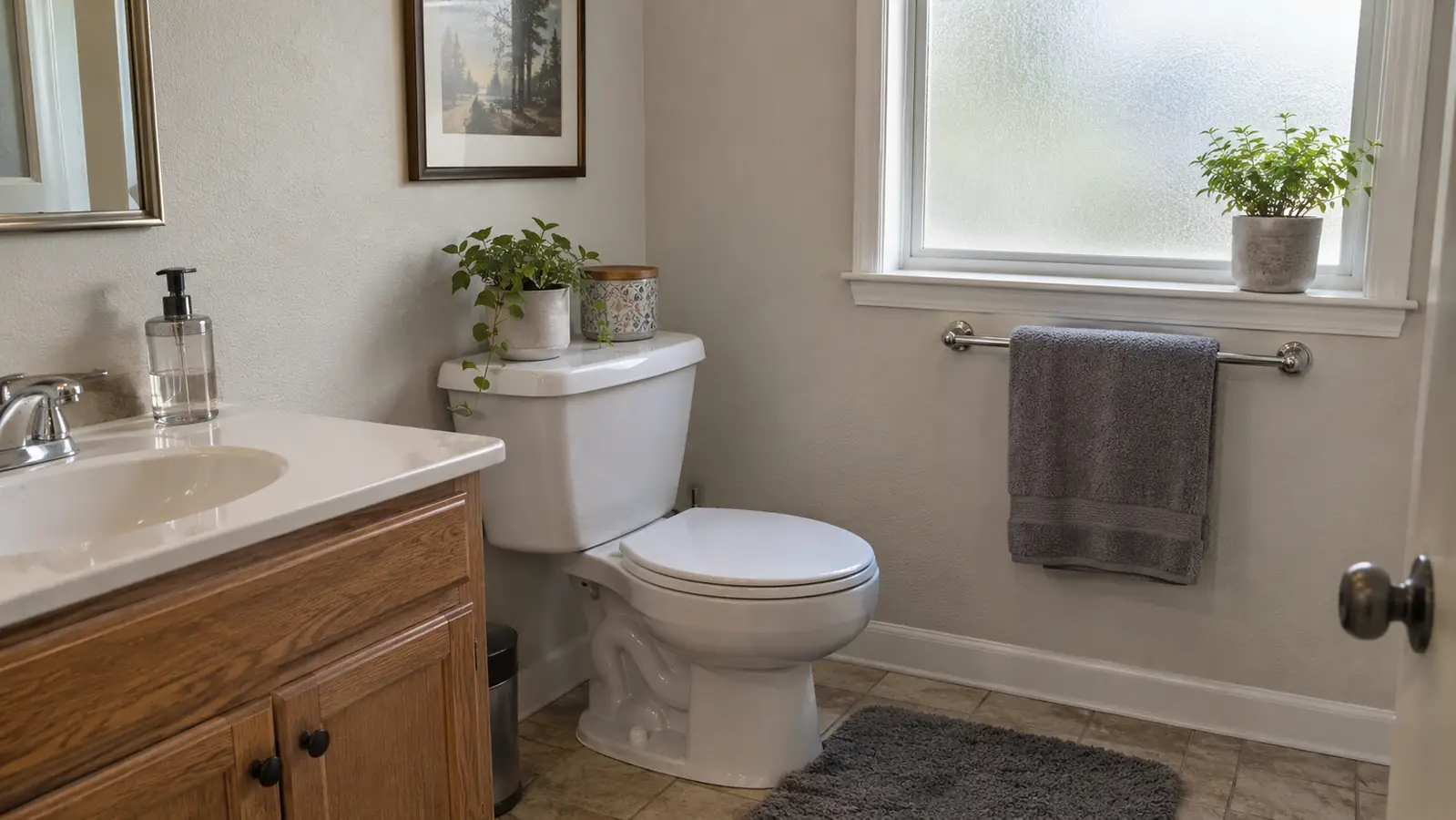
If you are reading this because somebody in your house has started using the towel bar to stand up from the toilet, I have been exactly where you are. We put a Medline toilet safety rail on the only toilet in our house back in March, and what follows is the plain version of how that has gone, including the parts I would have wanted to know before I clicked order.
Here is the honest headline first. The Medline rail is a well-made aluminum frame that does one job well, and that job is narrower than the product photos make it look. It is not a grab bar. It does not bolt to your wall. It will not fit every toilet, and in a tight bathroom it takes up floor space you may not have. I am 74, I spent 38 years fixing furnaces in other people's houses, and I know honest construction when I see it. This is honest construction. It is also not everything, and that difference matters when somebody you love is the one standing up at two in the morning.
The Quick Verdict
Well built, no drilling, and steady under two adults for eight months. It loses points for a wide footprint and for the number of bathrooms it quietly will not fit.
Amazon Check Today's Price →It Is Not a Grab Bar. It Is the Next Best Thing to Put on a Toilet.
Eight months in, the bolts have not walked loose on their own and neither of us reaches for the sink edge anymore.
Amazon Check Today's Price on Amazon →How It Has Held Up Since March
We had been doing the makeshift thing for a while before that. Marge pushed up on the sink edge, which is a good three steps from the toilet in our bathroom, and I used the towel bar, which is screwed into drywall and was never built to hold a grown man's weight. Neither of those is a plan. It is a habit you fall into because the bathroom was built in 1988 for people with better knees than ours. What finally moved me was standing in the doorway one evening in late February, watching Marge take that little hop of a step over to the sink before she sat down. She did not say anything about it and neither did I. I ordered the rail that night. It came in a box about the size of a card table, four and a half pounds, mostly air and cardboard.
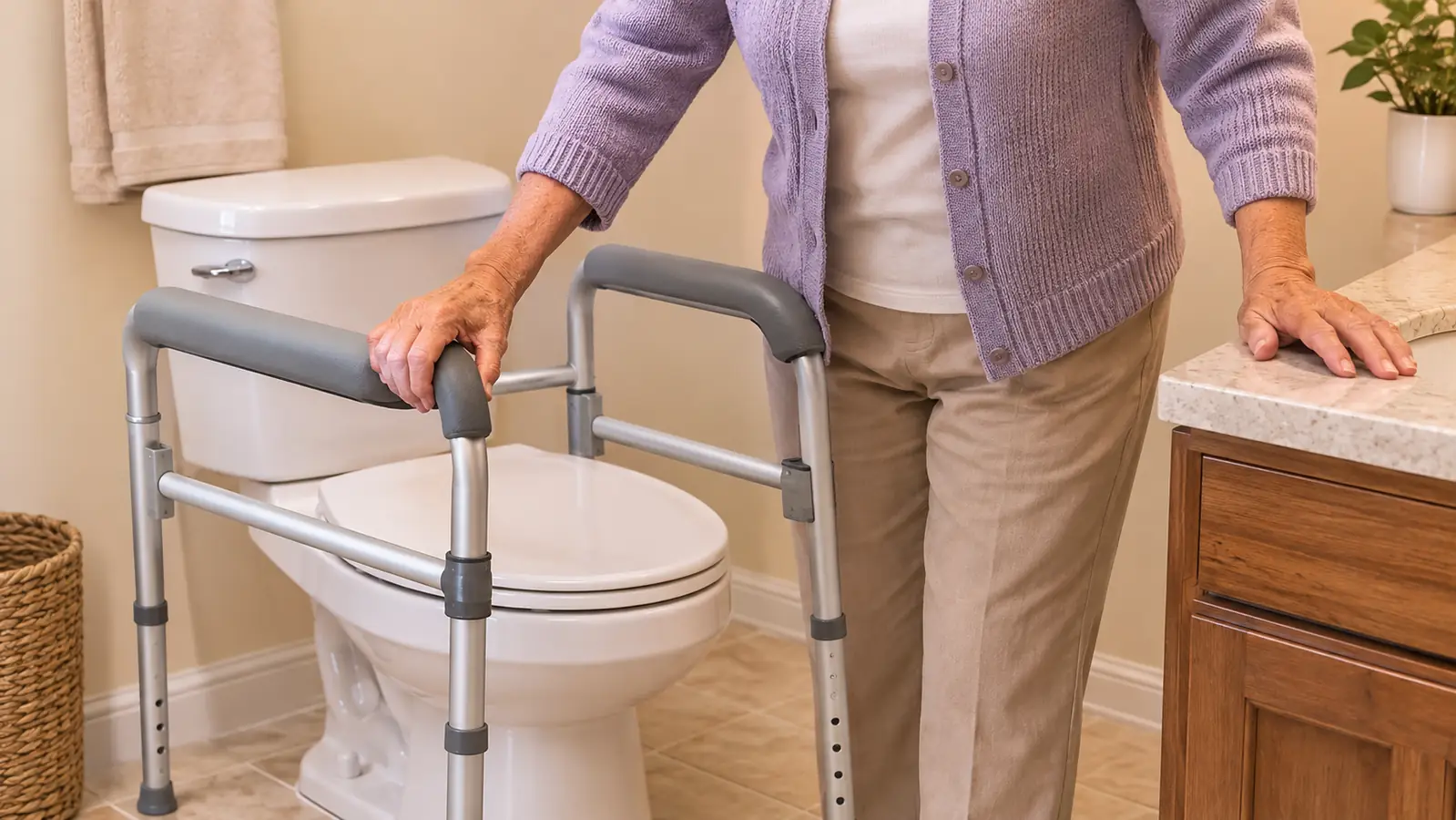
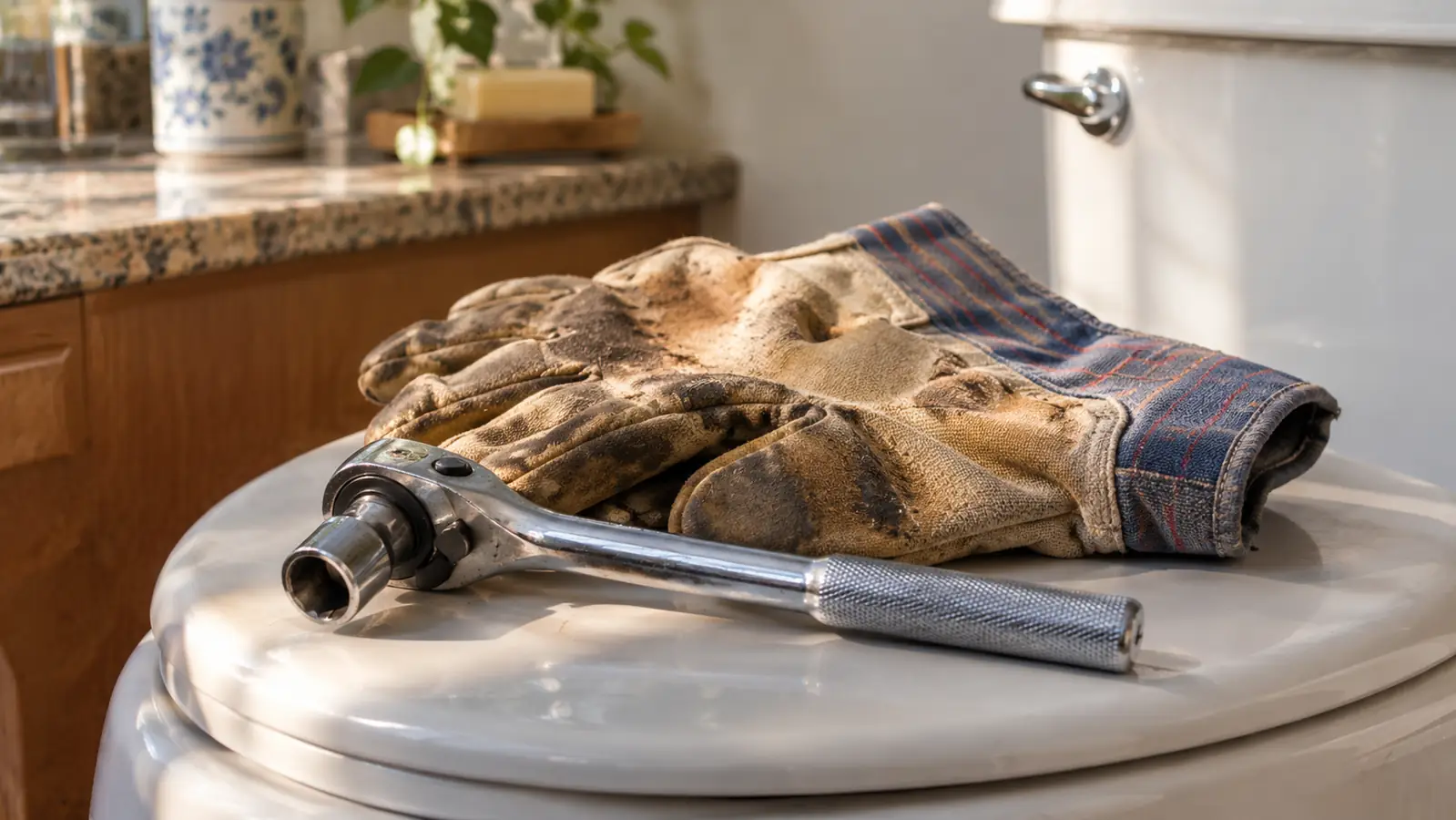
I installed the Medline rail on a Saturday morning in March, about a month after my right knee replacement, and I did it myself with a small socket wrench in about twenty minutes. The frame uses the two bolts that already hold your toilet seat down, so there is no drilling and no anchors in the tile. You lift the seat and the lid, take the two nuts off the back, set the frame's bracket over the same holes, and put the nuts back on. The legs reach the floor and that is the whole of the support. I set the arm height once that morning and I have not touched the height since. Marge is 5 foot 4 and I am 5 foot 11, and the frame does not flex under either of us. I did the job sitting on a step stool with the bathroom light on, because kneeling on a new knee was not happening, and I would recommend that to anybody. You are going to be down there for a few minutes with your head near the baseboard, and the porcelain is cold.
The one piece of upkeep is that I put a wrench on those two bolts about every two months. Not because they were loose, but because I am the kind of man who checks. In eight months I have taken up maybe a quarter turn twice, and both times it was the left nut, the one you cannot see from a standing position. If you are not going to check anything, check those. It takes ninety seconds, and it is the difference between a frame that is solid and a frame that is only solid in your memory.
Eight months in, the routine has gone quiet, which is what you want from a piece of bathroom equipment. I wipe the arms down with the same cloth I use on the sink, once a week, and the powder coat has not chipped or dulled anywhere. Marge uses it every trip. I use it every trip. Neither of us reaches for the sink edge anymore, and the towel bar has gone back to being a towel bar, which is the nicest thing I can say about a product. My physical therapist asked me at a visit in June whether we had put anything in the bathroom yet, and when I told her she nodded and said the two-arm setup was the one she usually suggested for people who did not want a bar put into the wall. I am not a medical person. That was her read, not mine.
What Nobody Tells You Before You Buy
The listing says easy to install and it is, but easy is not the same as nothing. You have to lift the seat and get down behind the bowl with a wrench, and if your knees are the reason you are buying this, that is the worst ten minutes of the whole project. The space between the back of the toilet and the wall in our bathroom is about four inches, so I did it by feel more than by sight, one hand on the nut and one on the wrench. Have a flashlight, and have it within reach before you start, because you will not want to stand up and go find one. Do not plan for the reach and it will be a bad afternoon.
Second thing: the legs stand on your floor. That means your floor matters more than the listing lets on. A thick bath mat under the legs will let the frame rock, so pull the mat back before you sit down, and get in the habit of it. Old uneven tile will do the same thing. Ours is flat enough that I never thought about it again after the first week, but I have been in plenty of bathrooms in this town where a level is a suggestion. If you can rock the frame with two fingers after you install it, you have a floor problem and not a frame problem, and no amount of tightening will fix it.
Third thing, and this is the one that gets people. Because it mounts on the seat bolts, your existing seat bolts have to be in usable shape. If yours are rusted solid or somebody overtightened them in 1994 with a pair of pliers, deal with that before the box arrives. Ours came out clean, so the job was twenty minutes. Yours might not be. If a nut will not turn, do not force it and crack the porcelain. Soak it, try again the next day, and if it still will not go, that is a plumbing job before it is a safety rail job.
What I did not expect was how long it took us to actually use it. The first week the frame was in the house, both of us stood up the old way and then put a hand on the arm as an afterthought, like touching a doorframe on the way through. It took maybe ten days before Marge pushed off the arms from the start instead of pushing off the sink and then resting her hand on the rail afterward. Habits are slow. If you install this for a parent and they ignore it for the first two weeks, that is normal and it is not the frame's fault. Give it a month. Leave it where it is and do not make a speech about it.
Where It Will Not Fit
The frame adjusts between 27.5 and 31.5 inches tall, the arms sit 18 to 24 inches apart, and the listed seat depth is 16.75 inches. Those numbers cover most standard toilets. They do not cover every toilet, and the listing cannot tell you which one you own. Measure before you order. Three measurements and a pencil. Toilet width across the base at the floor, the distance from the back of the bowl to the front of the seat, and how much clear floor you have in front of it before you hit a wall, a tub, or a door swing. Write them on the back of an envelope and take it to the bathroom with you. It is ten minutes of work that saves a return label.
A wide one-piece toilet with a skirted base is where I would expect trouble. Same for a toilet wedged into an alcove, or one where the vanity is close enough that the frame's front legs land under the cabinet door. Our bathroom is small, roughly ten feet by six, and it still worked, but it worked by about an inch. The right front leg clears the tub skirt by maybe two fingers, and I noticed that the first time I set the frame down. If you are tighter than that, you will know it the moment the frame touches the floor and the leg lands on something other than tile. There is no adjustment for that. The width between the arms is not the problem. It is the footprint at the floor.
And the toilet paper holder. Ours is on the wall to the left, at about the height of the frame's left leg, and it clears by an inch and a half. Move that holder two inches toward the toilet and I would have been writing a different article, or moving a holder. Look at your wall before you buy, not after. Same for the wastebasket some people keep beside the toilet, and the little shelf others have back there. Everything within a foot of the bowl either moves or has to be accounted for.
Eight months, two quarter-turns of a wrench, and those two seat bolts have not moved once on their own. That is the whole maintenance story.
Where It Earns Its Keep
The honest case for it is simple. Marge stands up now by pushing down on two arms at hip height instead of reaching three steps to the sink. That is the entire benefit and it is a real one. When I asked my physical therapist about the difference between this and a single bar, she said two arms let you push straight down instead of twisting toward one side, and that plenty of people who will not use a bar will use a frame because it feels like furniture instead of hospital equipment. I am not a medical person and I do not play one, so take that where it came from.
I use it too. After the knee replacement my right leg did not want to do the first inch of standing, and having something to push against at that exact height made the whole motion less of an event. Eight months on I still put a hand on the arm out of habit, the same way you touch a stair rail you do not strictly need. There is a night version of this too. At two in the morning, half awake, in the dark, the arms are where my hands expect them to be. That is worth more than it sounds like.
It also holds still. That sounds like nothing until you have leaned on something that shifted. The frame has not walked, tipped, or creaked since March, and both of us have leaned on it plenty. I checked it with my hip the way I check a ladder, hard, that first week, and it did not budge. A friend at church asked me about it in the parking lot after service one Sunday, because his mother is at the same stage Marge was, and I told him the same thing I am telling you. It holds still, and it does not need a wall.
What I Liked
- Sturdy aluminum frame that does not flex under a grown adult
- Mounts with the toilet's own seat bolts, no drilling and no wall anchors
- Height adjusts from 27.5 to 31.5 inches, arms set 18 to 24 inches apart
- Powder-coated frame wipes clean with a bathroom cloth
- Comes off in one piece if you need the toilet clear for a guest or a repair
Where It Falls Short
- Not a grab bar and should never be leaned on sideways
- Front legs eat floor space in a small bathroom
- Fit is fussy on wide, skirted, or alcove toilets
- Arms are bare metal with no padding
- Seat bolts need periodic checking, which is on you
What It Does Not Do
It does not anchor to anything. If you lose your balance and grab an arm on the way down, that arm is attached to a toilet, not to a stud. A wall-mounted grab bar is a different job with a different install, and if your doctor or physical therapist is telling you that is what you need, this frame is not a substitute. I would rather say that plainly than have somebody find out the hard way. The frame will take weight pushing down on it. It will not take you falling sideways onto it, and those are two different loads.
It also does not raise the seat, and it does not help you into the tub. In our house the tub is a separate piece of equipment entirely. If the actual problem is that the seat sits too low for your knees, this frame does nothing about that, and you should be looking at a different kind of product rather than this one. Nor does it help you off the couch, or replace a cane for the walk down the hall in the middle of the night. One job. That is the whole design, and it is a good design as long as you buy it for the right one.
Who This Is For
This is for a household with a standard toilet, a few inches of clear floor in front of it, and somebody whose knees or balance make the sit-down and stand-up the hard part of the trip. It is for two people who can share one arm height, or one person who wants both hands on something solid instead of grabbing at a wall. It suits a renter, too, because it comes off without leaving a mark, and it suits a house where nobody wants holes in the tile. If that is your bathroom, the Medline rail is a straightforward buy and I would make it again. It is not a medical device and it is not a fall prevention program. It is a frame that gives you two handles where there were none, and for us that has been enough for eight months.
Who Should Skip It
Skip it if your bathroom is too tight for the front legs, if your toilet is an unusual width or shape you cannot confirm with a tape measure, or if what you actually need is a bar bolted into framing. Skip it if the seat height itself is the problem.
Skip it also if nobody in the house is going to check the bolts now and then. A frame that has backed off is worse than no frame at all, and that is a maintenance obligation, not a suggestion. And skip it if the person who would use it has already been told by a professional to hold onto something anchored to the wall. Ask your physical therapist or your doctor which of those situations you are in before you spend the money. That is not a decision a retired furnace man should make for you.
Measure Your Toilet First. Then Check Today's Price.
Ten minutes with a tape measure saves a return label. If the numbers line up, this is the one I would buy again.
Amazon Check Today's Price on Amazon →